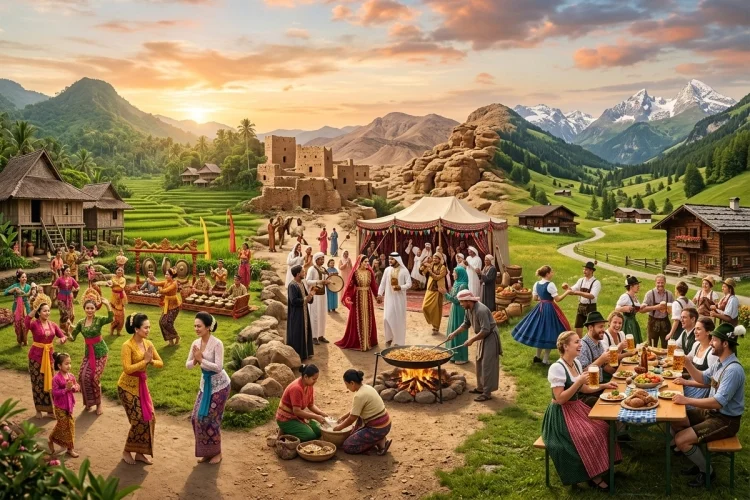

When the clock strikes midnight, people around the world cheer, hug their loved ones, watch fireworks, and welcome a fresh calendar year. It feels like a modern global party, but New Year celebrations have roots stretching back thousands of years.
The history and meaning of New Year celebrations reveal something deeply human. People have always wanted a clear moment to close one chapter, reflect on what happened, and begin again with renewed hope.
However, not every culture celebrates the new year on January 1. Some follow lunar, lunisolar, religious, or seasonal calendars, which place the occasion at a different point in the year.
The customs also vary widely, from eating symbolic foods and cleaning homes to lighting candles, visiting relatives, making promises, and honoring ancestors.
Despite these differences, the central idea remains surprisingly consistent: New Year is a time of transition. It connects the past with the future while giving individuals and communities an opportunity to imagine a better beginning.
What Does a New Year Celebration Represent?
At its simplest, a New Year celebration marks the end of one yearly cycle and the beginning of another. Calendars help societies organize agriculture, religious observances, trade, government, and everyday life.
The celebration itself gives emotional meaning to that practical change. Instead of quietly replacing one date with another, people turn the moment into a shared ritual filled with food, music, light, prayer, and social gatherings.
Anthropologist Margaret Mead described New Year as a point where an ending meets a beginning. Around the world, its rituals often combine opposite emotions: people remember losses while expressing hope, leave mistakes behind while setting goals, and say goodbye before welcoming something new.
This is why the holiday can feel both joyful and reflective. It is not simply about having a party—it is about recognizing the passage of time.
Ancient Mesopotamia and the Earliest New Year Festivals
Some of the earliest recorded New Year celebrations took place in ancient Mesopotamia. The Babylonians observed a spring festival known as Akitu, which was connected to the renewal of nature, religion, and royal authority.
During the festival, sacred statues were carried through Babylon along the Processional Way to the Akitu temple. The king participated in ceremonies that symbolically renewed the relationship between the human and divine worlds.
The timing made practical sense. Spring brought new agricultural activity, so the beginning of the growing season naturally represented rebirth and a fresh cycle.
Akitu was not simply a night of entertainment. It helped maintain social order, reaffirm political leadership, and express hopes for fertility and prosperity. The celebration shows that New Year festivals originally involved entire communities and their relationship with nature, religion, and government.
How January 1 Became New Year’s Day
January 1 was not always the beginning of the year. Early Roman calendars originally placed the new year closer to March, which aligned more closely with spring and the start of military and agricultural activity.
This changed through calendar reforms associated with Julius Caesar. The Julian calendar took effect in 45 BCE and established January 1 as the opening day of the year. The month was named after Janus, the Roman god of doorways, beginnings, and transitions.
Janus was commonly represented with two faces. One looked backward toward the past, while the other looked forward toward the future—an image that perfectly matches the modern meaning of New Year.
During medieval times, parts of Europe used other dates with Christian significance, including December 25 and March 25, as the beginning of the year. January 1 returned to greater prominence after Pope Gregory XIII introduced the Gregorian calendar in 1582.
The Gregorian system eventually became the civil calendar used across most of the world. As a result, January 1 developed into the most internationally recognized New Year’s Day.
Why New Year Is Celebrated on Different Dates
January 1 may dominate international calendars, but it is not the only New Year. Different celebrations exist because cultures have developed different methods of measuring time.
The Gregorian calendar follows the solar year, while other systems are based partly or entirely on the moon’s cycles. Religious calendars may also connect the beginning of a year with sacred history rather than a fixed season.
1. Lunar New Year
Lunar New Year celebrates the arrival of spring and the beginning of a new year in a lunisolar calendar. It is observed in several Asian cultures, including Chinese, Korean, and Vietnamese communities, although the names and traditions vary.
Common activities include cleaning the home, holding family reunion dinners, eating symbolic dishes, decorating with red, giving gifts, and wishing others good fortune. In many communities, the holiday continues for several days rather than ending after one night.
2. Nowruz
Nowruz marks the new year and the beginning of spring across a wide geographical area, particularly in Central and Western Asia. It is associated with the spring equinox and symbolizes the revival of nature.
Families may clean their homes, prepare special meals, visit relatives, light candles, and display symbolic objects. UNESCO recognizes Nowruz as an element of intangible cultural heritage shared by multiple countries and communities.
These examples show that New Year does not belong to a single date or nation. It is a broad human tradition expressed through many calendars and cultural identities.
Why Fireworks, Noise, and Countdowns Became Popular
Modern New Year celebrations often include loud sounds, bright lights, and a public countdown. These activities create excitement, but noise and fire have also carried symbolic meaning in older traditions.
Loud celebrations have commonly been used to drive away bad luck or negative influences. Light, meanwhile, represents hope, protection, knowledge, and the defeat of darkness.
The countdown gives people a precise shared moment. A crowd may contain thousands of strangers, but everyone focuses on the same final ten seconds and responds together when the year changes.
One of the most famous countdown traditions is the Times Square Ball Drop in New York City. New Year’s Eve celebrations began in Times Square in 1904, while the first illuminated ball descended from One Times Square in 1907.
The idea was inspired by older “time balls” used to help ships set their clocks accurately. Today, the Times Square event is broadcast internationally and has become a familiar symbol of the modern New Year.
The Meaning Behind Traditional New Year Foods
Food plays an important role because it brings families and communities together. However, many New Year dishes are also chosen for their shapes, colors, names, or symbolic associations.
In parts of the southern United States, black-eyed peas and leafy greens are traditionally associated with prosperity. The peas can represent coins, while greens resemble paper money.
Some Spanish and Portuguese traditions involve eating 12 grapes at midnight, one for each month of the coming year. Japanese families may eat long soba noodles, which can symbolize longevity.
Lentils are eaten in parts of Italy because their round shape resembles coins. In Greece and several Eastern European communities, a coin may be baked inside a special cake or bread, bringing luck to the person who finds it.
These foods vary, but their purpose is similar. People use familiar ingredients to express hopes for health, abundance, happiness, and good fortune.
Why People Make New Year’s Resolutions
The start of a year creates what feels like a natural reset point. People review their behavior and promise to exercise more, save money, improve relationships, learn a skill, or leave an unhealthy habit behind.
The idea of New Year promises is not new. Ancient Babylonian celebrations included commitments involving responsibilities and obligations, while Romans made promises connected with Janus and the beginning of the year.
Modern resolutions are usually personal rather than religious or political. Still, they reflect the same basic belief: a new cycle offers a chance to change direction.
Resolutions often fail when they are too broad. “Become healthier” is difficult to measure, while “walk for 30 minutes four times a week” provides a clear action.
The deeper value of a resolution is not perfection. It is the opportunity to examine your priorities and choose one realistic step toward the person you want to become.
How New Year Celebrations Connect Communities
New Year is often presented as an individual fresh start, but its strongest traditions are social. Families share meals, neighbors gather in public spaces, religious communities pray, and friends exchange messages across long distances.
These activities renew relationships. Visiting relatives, remembering ancestors, forgiving old disagreements, and giving gifts can strengthen a sense of belonging.
UNESCO notes that seasonal rituals and festive events can bring people home to celebrate with their families and reaffirm their connections to community traditions.
Digital technology has expanded this experience. People now watch celebrations in other time zones, send greetings instantly, and join video calls with relatives in different countries.
The methods have changed, but the purpose remains familiar: no one wants to enter the unknown future completely alone.
The Deeper Meaning of Beginning Again
New Year celebrations are powerful because the calendar creates a clear psychological boundary. December 31 and January 1 are only one day apart, yet they feel like the end of an era and the beginning of a new opportunity.
Of course, midnight does not erase debt, grief, conflict, or unhealthy habits. Real change requires patience and continued effort.
Still, symbolic beginnings can be useful. They give people permission to pause, recognize what matters, and approach the future more intentionally.
New Year traditions also remind us that time is shared. Cultures may use different calendars and ceremonies, but people everywhere experience change, uncertainty, memory, and hope.
That universal experience is the real reason New Year celebrations have survived for thousands of years.
The history of New Year celebrations stretches from ancient Mesopotamian spring festivals to Roman calendar reforms, Lunar New Year reunions, Nowruz ceremonies, symbolic meals, resolutions, fireworks, and modern countdowns.
Although traditions and dates differ, their central meaning is remarkably similar. New Year marks a transition between what has ended and what has not yet begun. It gives people time to reflect, reconnect, express gratitude, and imagine positive change.
As the next new year approaches, explore a tradition from another culture and think about the meaning behind your own celebration.
Choose one lesson from the past, one relationship to strengthen, and one practical goal for the future. A new calendar alone cannot transform your life, but it can inspire you to take the first step.