
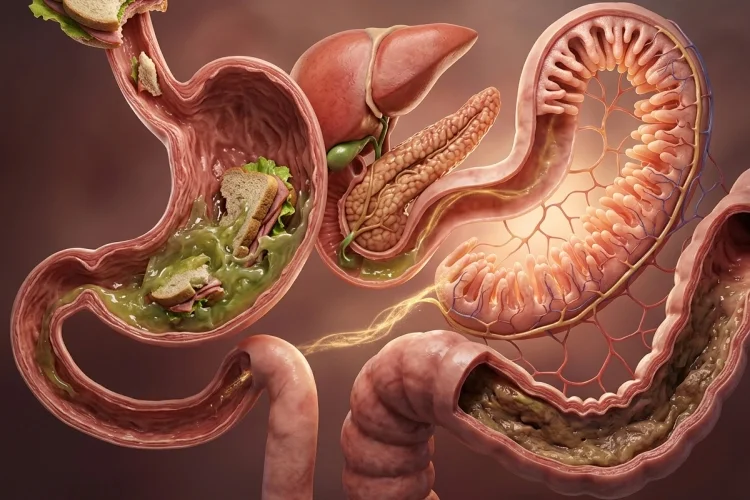
Every meal you eat goes on a surprisingly complicated journey. A sandwich may disappear from your plate in a few minutes, but your body must grind it, mix it with digestive fluids, separate its nutrients, absorb what it needs, and remove what remains.
So, how does the human digestive system work? It functions like a highly organized food-processing system. A group of connected organs breaks food into smaller substances that can enter the bloodstream and support energy production, growth, and cell repair.
The digestive system includes the gastrointestinal tract as well as supporting organs such as the liver, pancreas, and gallbladder. Digestion is both mechanical and chemical.
Your teeth physically crush food, while acids and enzymes break carbohydrates, proteins, and fats into simpler molecules.
The process begins before you swallow and continues through the stomach, small intestine, and large intestine. Let’s follow a typical meal through the body and explore what happens at every stage.
What Is the Human Digestive System?
The digestive system is a collection of organs that work together to process food and drink. Its main pathway is the gastrointestinal tract, or GI tract, which is a long, connected tube running from the mouth to the anus.
The GI tract includes the mouth, esophagus, stomach, small intestine, large intestine, rectum, and anus. The liver, gallbladder, and pancreas support digestion by producing or storing substances needed to break food down.
The system performs several important jobs. It moves food forward, breaks it into absorbable nutrients, transfers those nutrients into the blood or lymph, absorbs water, and removes solid waste.
Your digestive organs do not work independently. Muscles, nerves, hormones, enzymes, and helpful microorganisms coordinate the entire process.
Digestion Begins in the Mouth
Digestion starts the moment food enters your mouth – and sometimes even earlier. Seeing or smelling a meal can stimulate your salivary glands before you take the first bite.
Your teeth begin mechanical digestion by cutting and grinding food into smaller pieces. This increases its surface area, making it easier for digestive chemicals to work.
Saliva moistens the food so it can be swallowed more comfortably. It also contains enzymes that begin breaking down certain carbohydrates. Your tongue then mixes the chewed food into a soft mass called a bolus and pushes it toward the throat.
Chewing carefully can support this first stage. It does not completely digest your meal, but it reduces the amount of physical work required later in the digestive tract.
The Esophagus Moves Food to the Stomach
After you swallow, the food passes through the throat and enters the esophagus. This muscular tube connects the mouth to the stomach.
Food does not simply fall through the esophagus because of gravity. Waves of involuntary muscle contractions called peristalsis push it downward. Peristalsis also helps move material through other parts of the digestive tract.
A ring of muscle near the bottom of the esophagus opens to let food enter the stomach. It then closes to help prevent acidic stomach contents from flowing backward.
When this barrier does not close properly, stomach acid may move into the esophagus and cause heartburn or acid reflux. Occasional heartburn is common, but frequent or severe symptoms should be discussed with a healthcare professional.
The Stomach Mixes Food with Acid and Enzymes
The stomach is a muscular, expandable organ that temporarily stores food. Its walls contract and mix the meal with gastric juices, gradually turning it into a thick liquid called chyme.
Stomach acid creates an environment that helps break down food and protect the body from many swallowed microorganisms. Digestive enzymes also begin processing proteins into smaller components.
The stomach has a protective lining that helps prevent its own acid and enzymes from damaging the organ. Without this barrier, the same chemicals that digest food could injure stomach tissue.
Although the stomach plays a major role, it does not complete most digestion or nutrient absorption. Instead, it releases chyme into the first section of the small intestine in controlled amounts.
A large or high-fat meal may remain in the stomach longer than a small, lighter meal. This is one reason different foods can produce different feelings of fullness.
The Liver, Gallbladder, and Pancreas Join the Process
Three supporting organs make essential contributions once food enters the small intestine.
1. The Liver and Gallbladder
The liver produces bile, a digestive fluid that helps the body process fats. The gallbladder stores and concentrates bile, releasing it into the small intestine when needed.
Bile does not work like an enzyme. Instead, it helps separate large fat droplets into smaller droplets, giving digestive enzymes more surface area to work on.
The liver also processes nutrients absorbed from the digestive tract. Blood leaving the stomach and intestines passes through the liver, where nutrients can be stored, modified, or distributed to other tissues.
2. The Pancreas
The pancreas releases digestive enzymes into the small intestine. These substances help break down carbohydrates, fats, and proteins.
It also releases bicarbonate, which helps neutralize the acidic chyme arriving from the stomach. In addition to digestion, the pancreas produces hormones such as insulin that help regulate blood sugar.
Most Nutrient Absorption Happens in the Small Intestine
The small intestine is where most chemical digestion and nutrient absorption take place. It consists of three main sections: the duodenum, jejunum, and ileum.
Muscular contractions mix chyme with bile, pancreatic juices, and intestinal enzymes. Carbohydrates are broken into simple sugars, proteins into amino acids, and fats into fatty acids and other smaller components.
The inner wall of the small intestine contains tiny finger-like projections called villi. These structures greatly increase the surface area available for absorption. Nutrients can then pass through the intestinal wall and enter the bloodstream or lymphatic system.
Blood carries many absorbed nutrients to the liver before they are distributed around the body. Cells use them for energy, maintenance, growth, hormone production, and tissue repair.
The small intestine also absorbs much of the water that enters the digestive tract. By the time its contents reach the large intestine, most useful nutrients have already been removed.
The Large Intestine Absorbs Water and Forms Stool
Material that cannot be digested or absorbed moves into the large intestine, also known as the colon. Its main jobs include absorbing remaining water and electrolytes and turning waste into stool.
The colon contains a large community of microorganisms commonly called the gut microbiome. These bacteria help process some carbohydrates that human digestive enzymes cannot completely break down.
Bacterial fermentation can produce useful compounds, but it can also create gas. Digestive gas comes partly from swallowed air and partly from bacteria breaking down undigested carbohydrates in the large intestine.
As water is absorbed, the remaining material becomes more solid. Stool moves into the rectum, where it is stored until it leaves the body through the anus.
When material moves too slowly through the colon, excessive water may be absorbed, contributing to constipation. When it moves too quickly, less water is removed, which can contribute to loose stools or diarrhea.
How the Brain and Nerves Control Digestion
Digestion may seem automatic because you do not consciously tell your stomach to churn or your intestines to contract. These activities are regulated by nerves, muscles, hormones, and chemical signals.
The digestive tract has its own extensive network of nerve cells called the enteric nervous system. It helps control movement, enzyme release, blood flow, and other digestive functions. It also communicates with the brain through what is often called the gut-brain connection.
This connection helps explain why stress can affect the stomach and intestines. For some people, stress slows digestion and contributes to bloating or constipation. For others, it speeds things up and causes frequent bowel movements.
Hunger, appetite, fullness, emotions, sleep, and daily routines can all influence digestive activity.
Simple Ways to Support Digestive Health
A healthy digestive system depends partly on everyday habits. Eating a varied diet with fruits, vegetables, whole grains, and other fiber-rich foods can support regular bowel movements and beneficial gut bacteria.
Drinking enough water is also important because fluid helps waste move through the digestive system and allows fiber to perform its role effectively.
Regular physical activity can support normal bowel function, while eating slowly may reduce swallowed air and give your body more time to recognize fullness. Managing stress and getting adequate sleep may also help because the brain and digestive tract constantly communicate.
Digestive needs differ from person to person. Foods that feel comfortable for one individual may trigger bloating, reflux, or discomfort in another.
Persistent abdominal pain, unexplained weight loss, difficulty swallowing, repeated vomiting, blood in the stool, or a major change in bowel habits should not be ignored. These symptoms require advice from a qualified medical professional.
The human digestive system transforms ordinary meals into nutrients that your body can actually use. Digestion begins with chewing and saliva, continues through the esophagus and stomach, and reaches its most important absorption stage in the small intestine.
The liver, gallbladder, and pancreas provide digestive fluids, while the large intestine absorbs water and prepares waste for elimination. Throughout the journey, muscles, nerves, hormones, and gut bacteria keep the process moving.
Understanding how digestion works can make it easier to recognize the value of balanced food, fiber, water, exercise, and healthy routines. Start paying attention to how your eating habits affect your body, and seek professional advice when digestive symptoms are persistent, severe, or unusual.