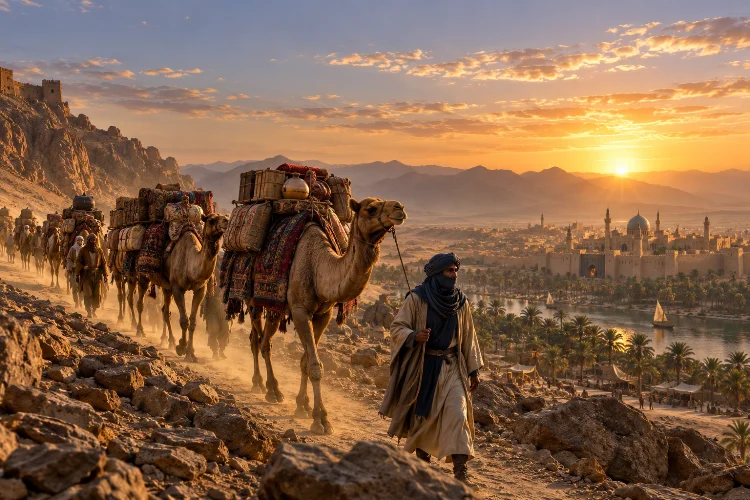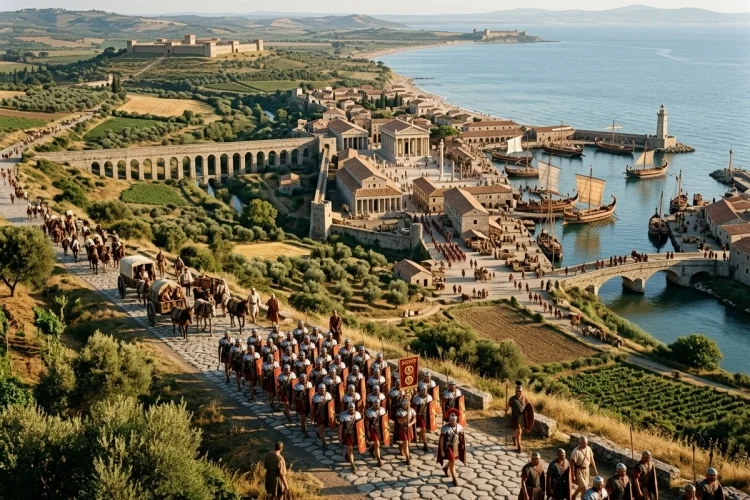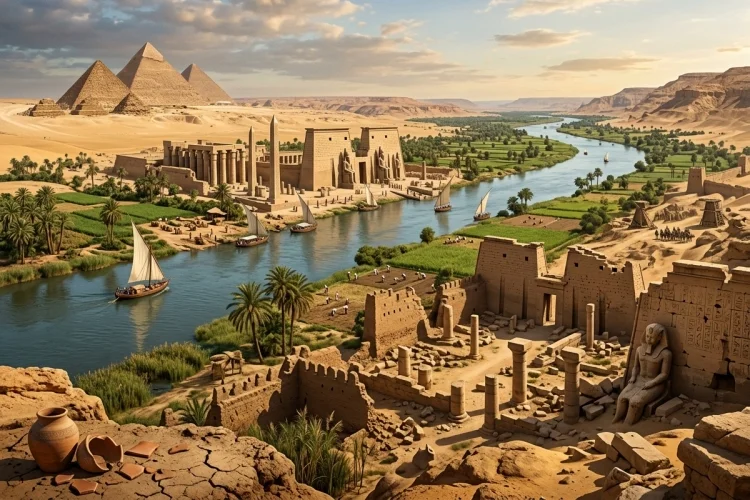
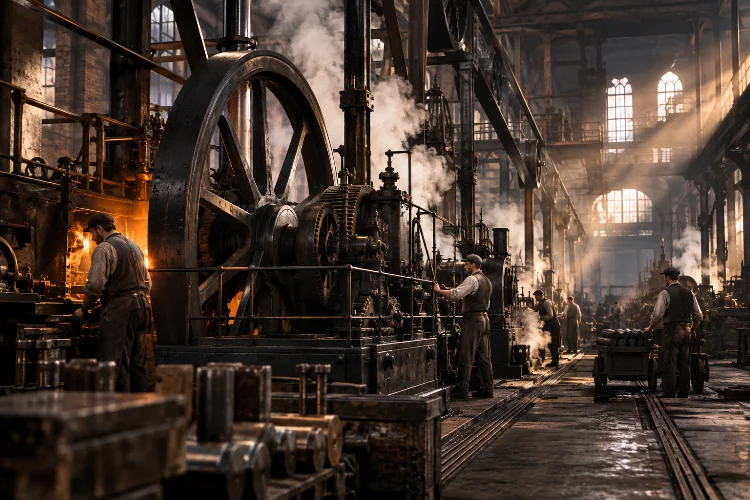
Imagine living in a world where almost everything you own is made by hand. Clothes take hours or even days to produce, most people work in agriculture, and traveling between cities can be slow and expensive.
Then, within a few generations, machines begin producing goods faster than ever before. Factories grow around cities, steam engines power mines and transportation, railways connect distant markets, and millions of people leave rural communities for industrial jobs.
That transformation became known as the Industrial Revolution.
Understanding the causes and effects of the Industrial Revolution helps explain how modern economies, cities, workplaces, transportation systems, and consumer culture developed.
Beginning in Britain during the eighteenth century before spreading to other regions, industrialization represented much more than the invention of a few machines.
It changed how people produced goods, where they lived, how they worked, and how businesses operated.
Some consequences brought enormous economic opportunities and technological progress. Others included dangerous working conditions, overcrowded cities, child labor, and severe environmental problems.
What Was the Industrial Revolution?
The Industrial Revolution was a major shift from economies dominated by agriculture and hand production toward economies increasingly based on machines, factories, and large-scale manufacturing.
Britain became the first country to experience industrialization on a large scale. The Science Museum describes the period between roughly 1760 and 1830 as the era in which Britain became the world’s first industrial nation.
Before industrialization, many products were created in homes or small workshops.
Textiles, for example, could involve different workers spinning thread and weaving cloth using relatively simple equipment. New machines made it possible to produce far greater quantities in centralized factories.
Industrialization did not happen overnight. It developed through overlapping changes in agriculture, technology, energy, transportation, finance, and labor.
Once those changes began reinforcing each other, production expanded at an unprecedented rate.
Agricultural Changes Helped Prepare the Way
One important cause of industrialization was the transformation of agriculture.
Britain experienced changes in farming methods, land ownership, crop production, and agricultural organization during the eighteenth and nineteenth centuries. Enclosure was one part of that process.
The UK National Archives explains that enclosure reorganized land into defined units, often consolidating scattered holdings and common fields into larger farms. Parliamentary enclosure became especially widespread during the eighteenth and nineteenth centuries.
More productive agriculture could support a growing population while requiring a changing mix of rural labor.
At the same time, some people who could no longer rely on traditional common land or rural employment moved toward towns and industrial centers in search of work.
Agricultural change was therefore not a single “cause” of industrialization, but it helped create conditions in which labor, food production, and population patterns were changing rapidly.
Coal and Steam Power Changed Production
Factories need energy.
Before industrialization, human muscles, animals, wind, and water provided much of the available mechanical power. Those energy sources were useful but limited.
Coal helped change that situation.
Britain had substantial coal resources, and increasing demand for mining created its own technical problem: deeper mines often filled with water.
In 1712, Thomas Newcomen developed a practical atmospheric steam engine that could pump water from mines. The Science Museum describes this as an important step toward a new mineral-energy economy.
Later in the eighteenth century, James Watt introduced major improvements to steam-engine design. His engines became more efficient and could provide reliable power for mills and factories.
Steam power meant factories were less dependent on rivers for energy.
Manufacturers could increasingly place facilities closer to workers, coal supplies, transportation networks, and markets.
That flexibility helped transform the geography of industry.
New Machines Made Mass Production Possible
Technology was another major force behind the Industrial Revolution.
The textile industry became one of the most important early examples.
Innovations in spinning and weaving allowed manufacturers to produce yarn and cloth much more quickly than traditional hand methods. Production gradually shifted from cottages and small workshops toward large mills containing expensive machinary.
This created a powerful economic cycle.
Better machines increased output. Higher production could reduce the cost of manufactured goods, while lower prices could increase consumer demand. Growing demand encouraged businesses to expand factories and invest in additional technology.
Manufacturing increasingly became organized around speed, specialization, and scale.
These ideas remain central to modern industry. Today’s automated factories are far more sophisticated, but the basic goal—producing more goods with less labor per unit—became much more important during industrialization.
Factories Changed the Way People Worked
One of the biggest effects of industrialization was the development of the factory system.
Agricultural and craft work had often followed seasons, daylight, or individual production schedules. Factory work was different.
Workers had to follow fixed hours and operate according to the speed and organization of industrial machinery.
For many early factory workers, conditions could be extremely difficult.
UK Parliament records show that early mills often imposed long working hours and employed large numbers of children.
Around 1800, approximately 20,000 apprentices were working in cotton mills, and during the following decade children under 13 made up as much as one-fifth of the cotton industry’s workforce.
Factories provided employment, but early industrial employment frequently lacked modern safety rules, limits on working hours, and worker protections.
That eventually contributed to growing pressure for reform.
Industrialization Accelerated Urban Growth
Factories needed workers, and workers needed somewhere to live.
As industrial employment expanded, towns near mines, mills, factories, canals, and transportation networks grew rapidly.
This process contributed to large-scale urbanization.
Industrial cities offered opportunities that rural areas could not always provide. People could earn wages, find different kinds of employment, and become part of expanding commercial economies.
But rapid urbanizaton also created serious problems.
Housing construction often struggled to keep pace with population growth. Many working-class neighborhoods suffered from overcrowding, inadequate sanitation, pollution, and limited access to clean water.
Industrial cities could therefore represent opportunity and hardship at the same time.
The modern city – with factories, offices, transportation hubs, dense residential districts, and specialized services – was strongly shaped by this period of economic transformation.
Transportation Became Faster and Cheaper
Producing thousands of items is only useful if businesses can move raw materials into factories and finished goods to customers.
Transportation therefore became another critical part of industrialization.
Canals initially helped businesses transport heavy materials such as coal. Steam technology later transformed railways and shipping.
Rail networks dramatically reduced the time required to move people and goods between industrial centers.
Faster transportation also expanded markets.
A manufacturer no longer needed to depend mostly on customers living nearby. Products could be shipped to distant cities, ports, and eventually international consumers.
Transportation and manufacturing strengthened each other.
Factories created demand for better transport, while better transportation made larger factories and wider markets more profitable.
That relationship remains visible in today’s global supply chains.
Economic Growth and Consumer Goods Expanded
Perhaps the most significant long-term effect of industrialization was the enormous increase in productive capacity.
Machines allowed societies to produce goods and services at levels that would have been difficult using traditional production methods.
Our World in Data identifies the Industrial Revolution as a major turning point in the history of sustained economic growth. Technological improvements made it possible for production and average incomes to eventually rise far beyond the limits typical of earlier economies.
This did not mean everyone immediately became wealthy.
Benefits were unevenly distributed, and living standards for many industrial workers remained harsh, particularly during the early stages of industrialization.
Over the longer term, however, productivity growth helped make manufactured products increasingly affordable.
Clothing, household items, transportation, construction materials, and eventually countless consumer products became available on a scale unimaginable to earlier generations.
Child Labor and Poor Conditions Led to Reform
Industrial expansion also exposed serious social problems.
Children could be attractive to factory owners because they were inexpensive to employ and could perform certain tasks around machinery. Long hours, dangerous equipment, and limited education became major concerns.
Public pressure gradually led to government intervention.
Britain’s Factory Act of 1833 prohibited factory employment for children under nine in industries covered by the law, limited working hours for older children, required some schooling, and established factory inspectors.
Enforcement was initially limited, but the law represented an important change.
Government was beginning to accept greater responsibility for regulating industrial working conditions.
Additional reforms followed throughout the nineteenth century, gradually addressing child labor, workplace safety, working hours, education, and other social issues.
Modern labor regulation developed partly from problems first made highly visible in industrial factories.
The Environmental Effects Were Enormous
Industrialization changed the environment as dramatically as it changed the economy.
Coal-powered factories released smoke into growing cities. Mining altered landscapes, industrial waste polluted waterways, and expanding manufacturing required enormous quantities of raw materials.
This created an important contradiction.
Fossil fuels allowed societies to generate huge amounts of energy, manufacture more products, improve transportation, and support economic growth.
At the same time, dependence on coal and later other fossil fuels created long-term enviromental consequences.
The industrial energy system that began taking shape more than two centuries ago eventually became the foundation of modern global energy consumption.
Today’s debates over climate change, renewable energy, pollution, and sustainable manufacturing therefore have deep historical roots.
How the Industrial Revolution Shaped the Modern World
The effects of the Industrial Revolution extend far beyond nineteenth-century factories.
Modern mass production, global supply chains, wage employment, rail transportation, industrial cities, engineering, automation, and consumer markets all developed from systems transformed during industrialization.
It also changed expectations about technological progress.
Businesses learned that investing in machines and scientific improvments could increase productivity and profits. Governments increasingly recognized the importance of infrastructure, education, regulation, and industrial development.
Later industrial revolutions introduced electricity, automobiles, chemicals, telecommunications, computers, robotics, and artificial intelligence.
The technologies changed, but the broader pattern remained familiar: innovation transformed production, which then transformed society.
The causes and effects of the Industrial Revolution reveal one of the biggest turning points in human history.
Agricultural changes, coal, steam power, technological innovation, expanding markets, and new transportation systems helped create a powerful new industrial economy.
The results were complicated.
Factories increased production, transportation became faster, cities expanded, and sustained economic growth eventually improved material living standards for many people.
At the same time, industrialization produced dangerous working conditions, child labor, overcrowding, pollution, and significant social inequality.
Many features of modern life – from factory production to global supply chains – can be traced back to this transformation.
The next time you use a mass-produced product, travel by modern transportation, or order something online, consider the industrial changes that made today’s interconnected economy possible.